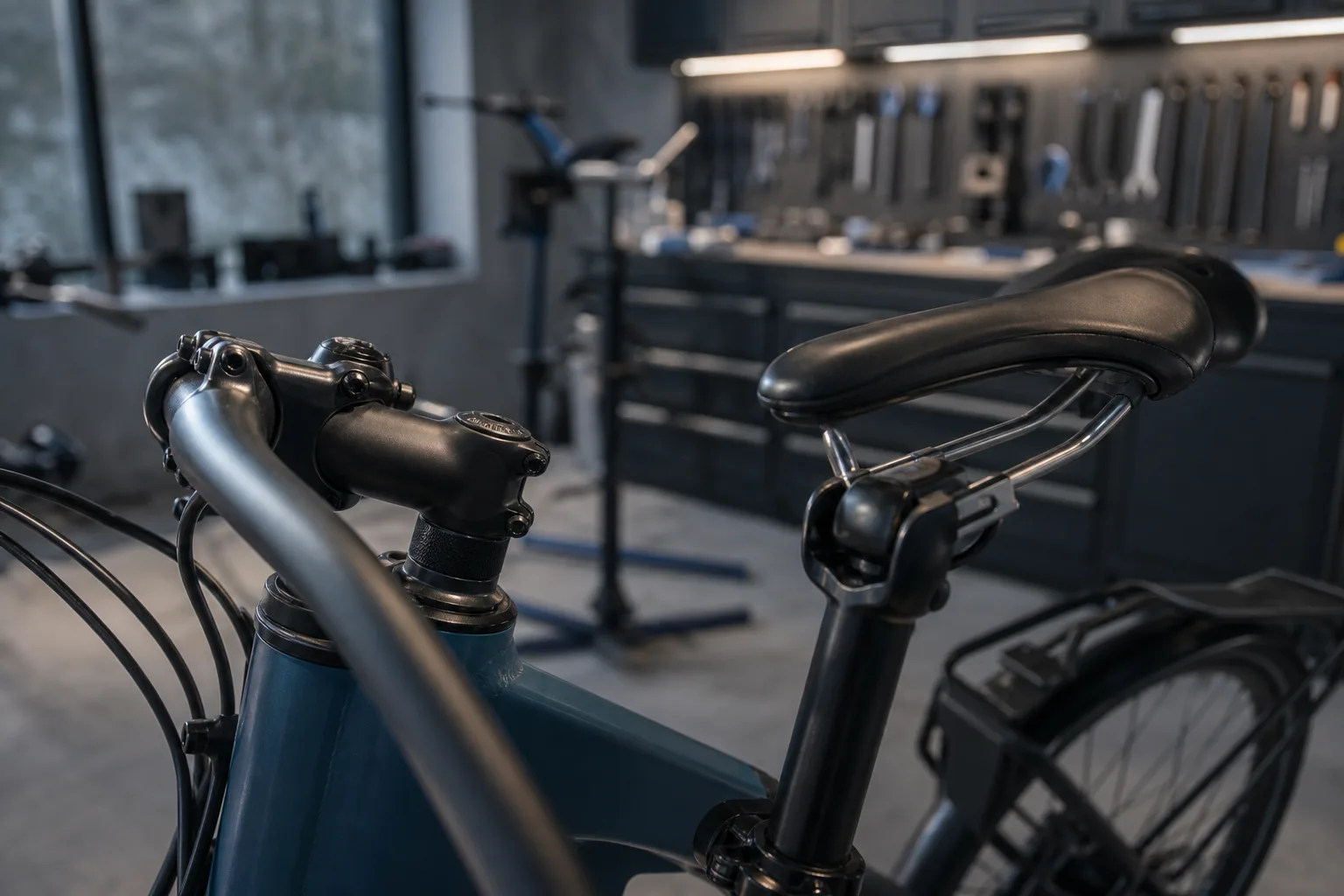
One rider worked out how electric bicycles are actually sized, then wrote down the measurements, the geometry numbers and the shop questions that turned out to matter. Free to read, nothing for sale.
A bike that is close but not right sits in an awkward category, because the shop will tell you it can be adjusted and the shop is often correct, but not always, and the difference costs either forty dollars or fifteen hundred. Contact points move. Frames do not. The useful skill on a test ride is separating the discomfort that comes from where your hands, seat and feet are sitting relative to the frame from the discomfort that comes from the frame itself being longer, taller or heavier than your body wants. Four adjustments cover most of the first category.
1. The stem, which buys reach and very little else
Reach on an electric bike tends to run long, partly because the top tubes are stretched around battery placement and partly because the upright posture that sells well demands a bar position further forward than a road frame would use. A stem swap is the standard answer, and it works within a narrow range: roughly two to four centimeters shorter, sometimes with a steeper angle to lift the bar. Beyond that the steering goes twitchy, because you have shortened the lever you steer with while leaving trail unchanged. Compare a 90mm stem against a 70mm on the same frame and the handling difference is noticeable but livable. At 50mm it is not.
The test-ride check is specific. Ride with hands on the grips and elbows slightly bent, then look at where the front hub sits relative to the handlebar. Too far behind and you are stretched. More useful still: take one hand off the bar at low speed. If the bike lurches, you were carrying weight on your arms that your core should have been holding, which reach is the usual cause of. That is a stem problem, and a stem fixes it.
2. The saddle, where fore-aft matters more than the pad
Most riders replace a saddle for comfort and get the wrong variable. Width matters, and sit-bone spacing is worth measuring, but the adjustment that changes how a near-fit bike feels is fore-aft position on the rails, which shifts your hips relative to the crank spindle and therefore changes effective reach as a side effect. Sliding a saddle back two centimeters lengthens the cockpit; sliding it forward shortens it while loading your hands. Do both before spending anything. Then, if the saddle still hurts, replace it, and expect to pay somewhere in the range of a mid-priced accessory rather than a component.
3. Shorter cranks, the underrated fix for hip and knee angle
Crank length gets almost no attention on electric bikes and deserves more, because the motor flattens the penalty. On an unassisted bike, going from 175mm to 165mm cranks costs leverage that you feel on a climb. On a mid-drive or hub-drive with meaningful assist, that leverage is being supplied elsewhere, so the cost is close to nothing while the benefit is real: less hip flexion at the top of the pedal stroke, a knee that tracks better, and more clearance for riders with shorter femurs. Shorter riders on step-through frames often find this the single most effective change available.
The test-ride signal is a pinching sensation at the front of the hip at the top of each stroke, or a knee that wants to swing outward. Both point to cranks that are long for your leg. Neither is fixed by raising the saddle, which only trades one problem for a rocking pelvis.
4. What contact points cannot rescue
Standover is the hard line. If the top tube meets your inseam with no clearance, no stem, saddle or crank changes that, and a step-through or a smaller frame is the answer rather than a workaround. Seat tube length is the second: when the minimum insertion mark on the post is already above your correct saddle height, the frame is too tall, full stop. Assembled weight is the third, and it is the one riders discover late, usually in a garage or on a curb. The Consumer Product Safety Commission oversees safety requirements for bicycles sold in the United States, but nothing in that remit makes a sixty-pound bike lighter for the person lifting it.
5. How to run the test ride so it answers the question
Bring the shop's own tools into the conversation. Ask them to slide the saddle, raise the bar, swap a stem from the parts bin, and then ride it again, because a fit problem that improves under ten minutes of adjustment is a fit problem you can buy your way out of cheaply. A problem that stays put after the contact points have moved through their range is telling you about the frame. Fifteen minutes on a parking lot loop distinguishes the two more reliably than any geometry chart.
Write down what changed and what did not. The shop that adjusts freely before the sale is the same shop that will adjust freely after it, and that relationship is worth more than the fifty dollars a stem costs.